Spirited Away and the Western Encounter with Japanese Rope
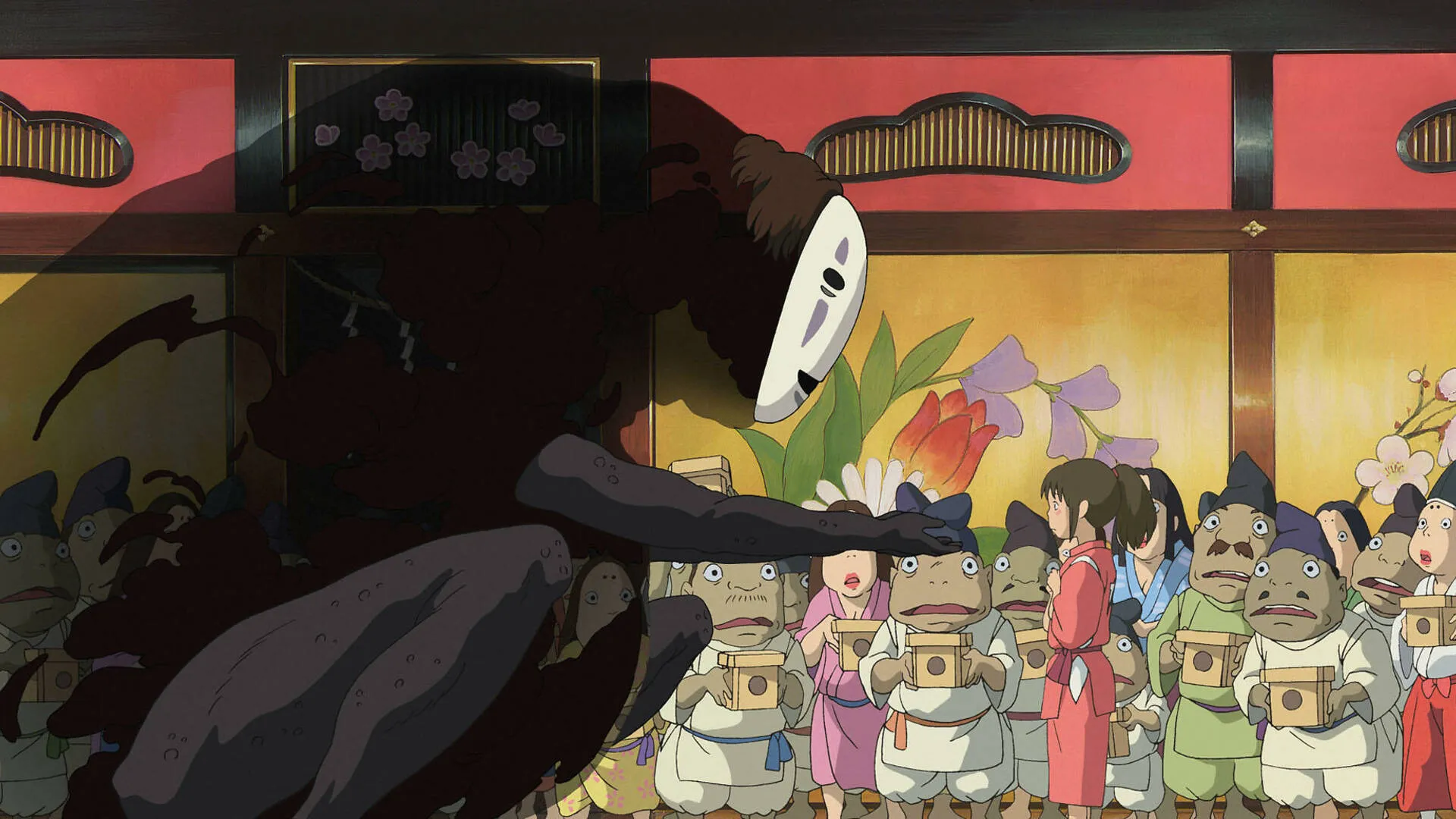
At the beginning of Spirited Away, a young girl, Chihiro, and her family wander into what appears to be an abandoned amusement park. Chihiro’s parents discover a lavish spread of food laid out on a row of market stalls. Bowls steam. Meat glistens. Dumplings wait invitingly on platters. The father shrugs and begins eating. The mother joins him. Neither asks where the food came from or who prepared it.
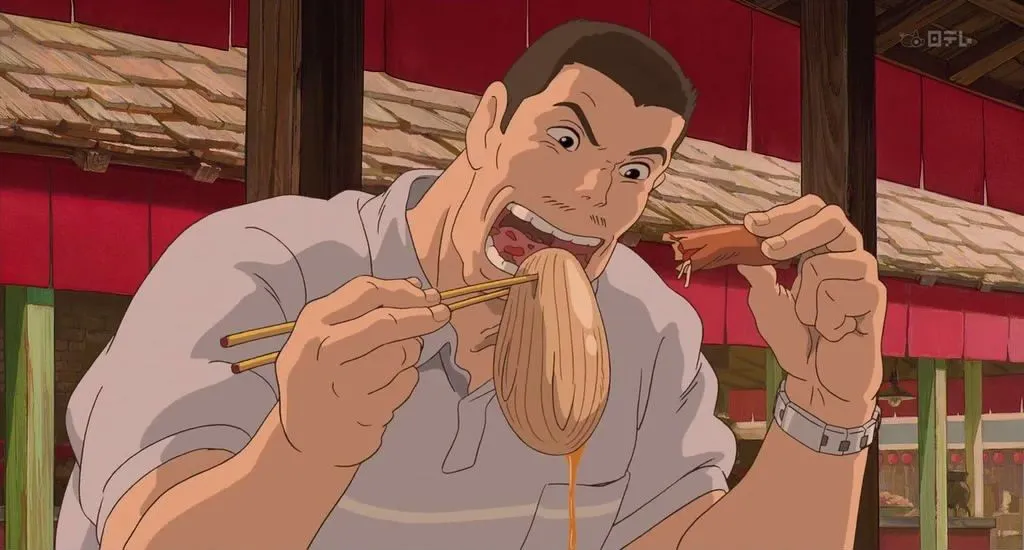
Within minutes they gorge themselves.
The audience soon learns what the parents do not know: the food belongs to the spirit world. Their act of careless and reckless consumption transforms them into pigs, to the young girl’s horror..
This moment, unsettling and memorable, captures one of Hayao Miyazaki’s recurring themes. Cultural spaces are not simply collections of objects. They are worlds governed by invisible rules, relationships, and meanings. They are complicated and are often filled with hidden risks and dangers. When outsiders enter such spaces without understanding those rules, transformation inevitably follows.
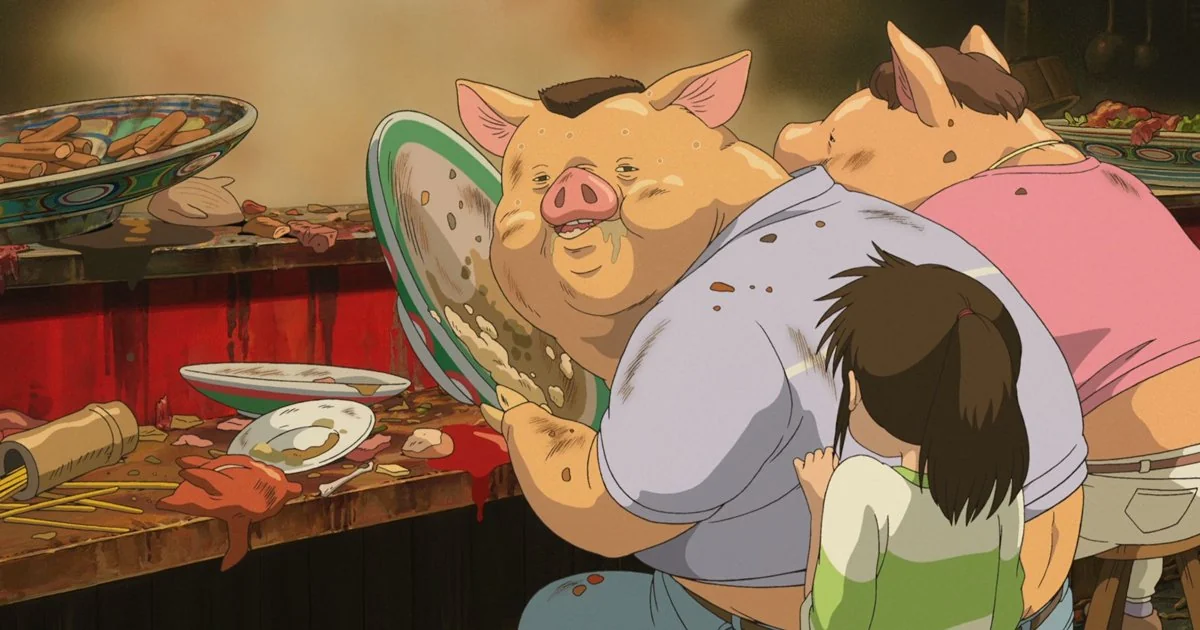
The Western encounter with Japanese rope bondage often resembles this cinematic moment in surprising ways. Over the past several decades, images, techniques, and aesthetics from Japanese rope traditions have traveled widely beyond Japan. Photographs, films, and workshops introduced Western audiences to a striking visual practice whose origins lay in twentieth-century Japanese erotic culture.
Like Chihiro’s parents encountering the spirit banquet, many of us first encountered the forms of Japanese rope before we encountered the cultural logic that produced them. This is not a criticism. Cultural practices always change as they travel. Rather, it reflects a common pattern of cultural exchange: images and techniques, particularly aided by the growth of the Internet, move quickly across borders, while the social worlds that gave rise to them take longer to understand.
The result has been a complex process of translation, reinterpretation, and transformation.
To understand this dynamic, it is useful to return to the world Miyazaki constructed in Spirited Away. The film provides an unexpected but illuminating metaphor for the Western reception of Japanese rope culture. Though the entire film, with Chihiro navigating the spirit world and its unique set of rules, provides an apt metaphor, there is one key moment where Miyazaki illustrates dynamics that parallel the cultural journey of kinbaku as it has moved across linguistic and social boundaries.
The Spirit Banquet: Encountering the Forms
The banquet scene in Spirited Away establishes the film’s central tension.
Chihiro’s parents immediately recognize the food before them as edible. The dishes resemble familiar street foods, yet also have an uncanny quality to them. Steamed buns, roasted meat, bowls of soup, and other delicacies appear ready to eat. The father confidently assumes the food must belong to a nearby restaurant and begins eating with casual entitlement.
The father proclaims that he has both cash and credit cards. If he can pay for it; he can eat it.
The problem is not that the food is mysterious or expensive.
The problem is that the parents misunderstand the context in which the food exists.
The banquet belongs to the spirits. It is part of a world with rules the parents neither perceive nor respect. Their act of consumption becomes transgression precisely because they assume the food functions according to the rules of their own world.
In many ways, the Western discovery of Japanese rope culture unfolded through a similar encounter with forms detached from context.
Kinbaku is best understood not simply as pornography or as art, but as the center of an erotic subculture in which aesthetic appreciation, erotic stimulation, and performative interaction converge. Within this cultural space, rope becomes a subcultural phenomenon through which participants and audiences cultivate shared forms of interpretation, connoisseurship, and emotional experience.
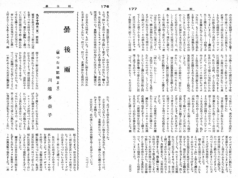
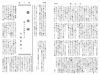
In the early development of modern kinbaku, storytelling played a crucial role in shaping how rope was understood and appreciated. In postwar erotic magazines such as Kitan Club and later publications like Uramado, rope imagery rarely appeared as isolated photographs. Instead, images were embedded within short stories, serialized narratives, and illustrated scenarios that framed the bondage as part of a dramatic situation.
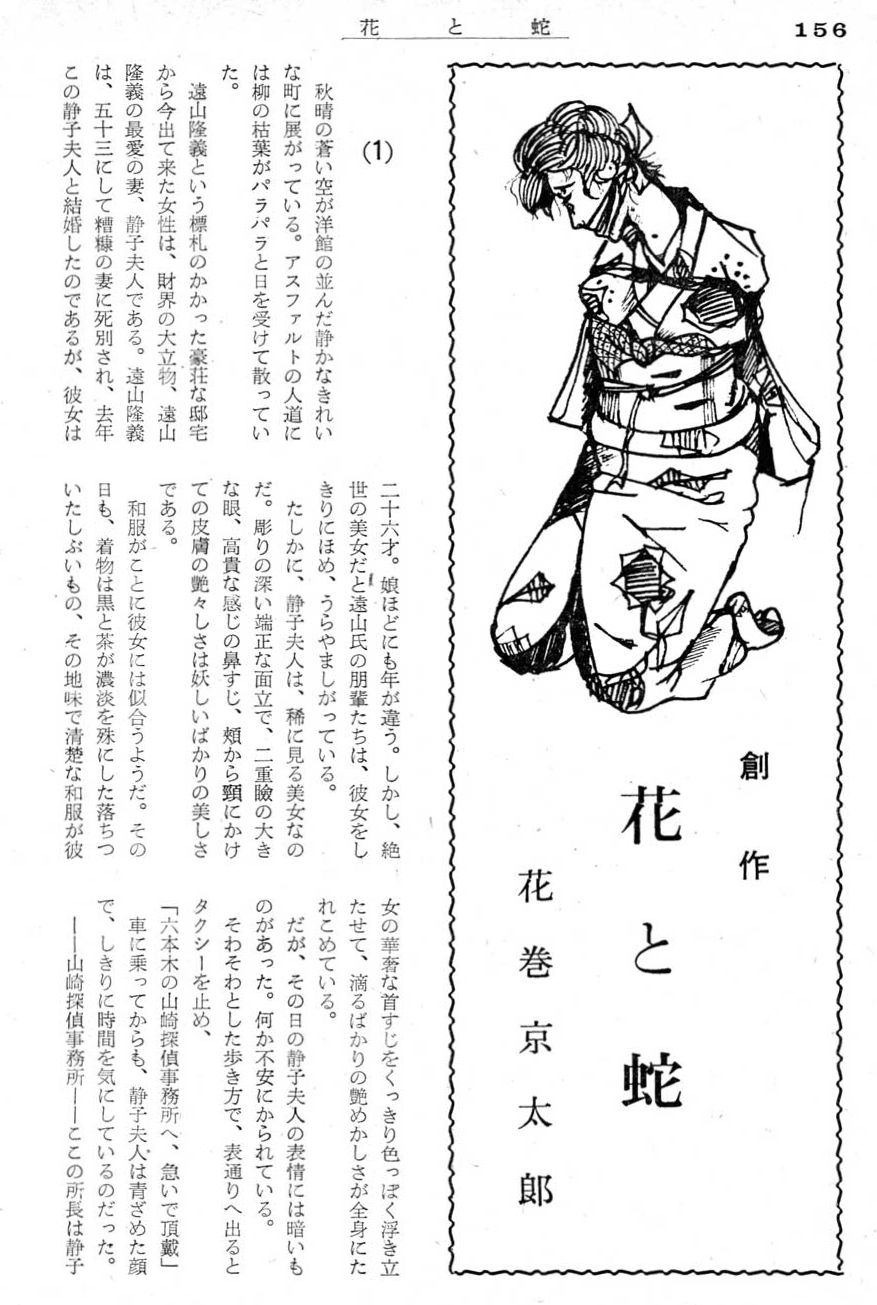
These narratives often depicted encounters involving capture, punishment, humiliation, or emotional tension, giving readers a context in which the rope became a theatrical device rather than merely a physical restraint. The model’s expressions, posture, and reactions were meant to be interpreted as part of the unfolding story. In this sense, the magazines cultivated not only erotic arousal but also a mode of imaginative participation in which readers learned to read rope scenes as narrative performances. The intertwining of image and story helped establish kinbaku as a form of erotic storytelling, where the rope, the tied body, and the surrounding narrative together produced meaning.
This narrative framing was not incidental. Early readers encountered rope scenes primarily through fiction and serialized narratives, and the photographs were often understood as visual moments within an imagined story. The tied body was therefore interpreted not only through its physical position but through the emotional situation described in the text. Rope functioned as a dramatic device within an erotic narrative world rather than simply as a technical form of restraint.
An additional feature of magazines such as Kitan Club further reinforced the importance of storytelling. A significant portion of the magazine’s content came from reader submissions, including fictional scenarios, confessional letters, and erotic fantasies. Readers were therefore not merely passive consumers of bondage imagery but active participants in constructing the narrative world in which rope scenes were imagined and interpreted. This participatory storytelling culture helped transform kinbaku into more than a visual fetish. It became part of a shared imaginative space in which readers, writers, models, and photographers collectively shaped the emotional and narrative meanings of rope.
Scholars of Japanese sexual media have shown that erotic magazines often function as sites of participatory cultural exchange rather than merely vehicles for pornographic imagery. Anthropologist Anne Allison has argued that erotic media in Japan frequently generates “interactive erotic publics,” spaces in which readers collectively engage with fantasies through stories, serialized narratives, and shared discussion. Studies of postwar fetish publishing similarly emphasize the importance of reader participation and community formation. For example, research by Mark McLelland demonstrates that magazines devoted to sexual subcultures often cultivated networks of readers who exchanged letters, fantasies, and commentary, transforming publications into forums for shared erotic imagination.
Here is a polished section you can integrate into your essay, drawing directly on the structure and content of the Kitan Club page you provided:
Reader Participation and the Construction of Erotic Worlds
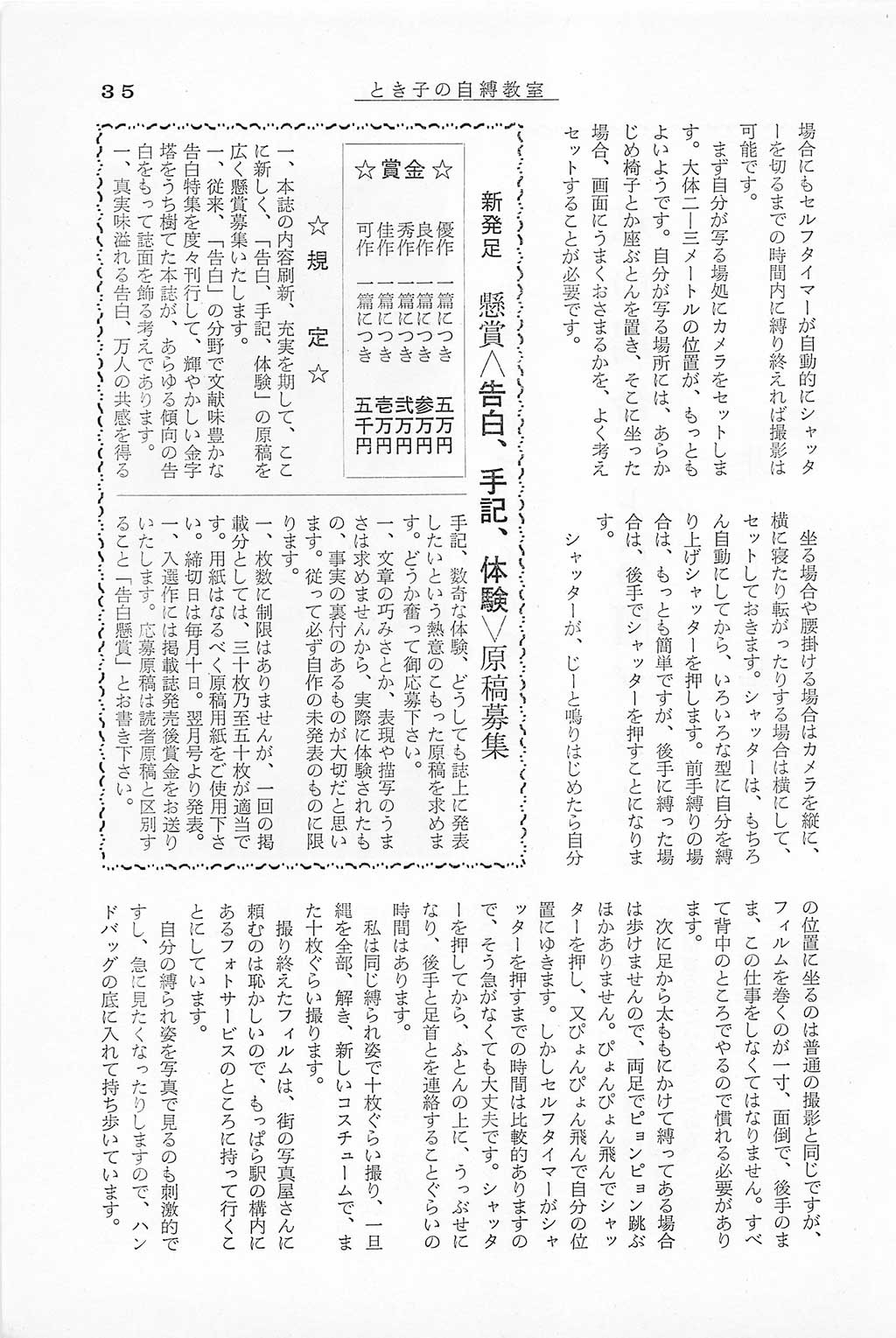
An additional and often underemphasized feature of Kitan Club was the extent to which it functioned not merely as a publication, but as a participatory platform through which readers actively shaped the magazine’s content and, by extension, the evolving meanings of kinbaku itself. The page reproduced here makes this dynamic unusually explicit. Framed as a call for submissions, it invites readers to contribute “confessions, diaries, and experiential accounts” (告白・手記・体験), emphasizing that the magazine seeks material grounded in lived or vividly imagined experience rather than abstract commentary.
The language of the call is striking in its tone of encouragement and inclusion. Readers are told that even “strange experiences” or personal episodes are valuable, provided they possess a sense of immediacy and truthfulness. The emphasis on authenticity is paired with an insistence on narrative vividness, suggesting that what mattered was not simply what happened, but how it could be rendered into a compelling erotic story. In this way, Kitan Club positioned its readership not as passive consumers of content, but as collaborators in a shared project of erotic storytelling.
Equally significant is the magazine’s clear articulation of incentives. The page outlines monetary rewards for selected submissions, with escalating prizes for higher-quality contributions. This formalization of reader participation through compensation reflects a hybrid structure: part amateur confessional space, part semi-professional literary marketplace. The boundary between reader and author becomes porous. A reader’s fantasy, once submitted, edited, and published, reenters the magazine as part of the collective imaginative archive that future readers will encounter.
The submission guidelines further reveal how this participatory system shaped the aesthetic of the magazine. Contributors are instructed to write in a way that enhances the “interest” and “readability” of their accounts, implicitly encouraging dramatization, emotional intensity, and narrative structure. The result is not raw confession, but stylized confession. Personal experience is filtered through the expectations of an erotic readership, producing a distinctive genre in which authenticity and performance are intertwined.
This participatory framework had direct implications for how rope bondage was understood. Because many of the scenarios in which rope appeared were generated by readers themselves, the meanings attached to kinbaku were not dictated solely by photographers or editors. Instead, they emerged through a distributed process in which readers imagined situations, articulated desires, and collectively refined the narrative conventions of bondage. Rope became embedded within a participatory narrative ecology, where its significance was continuously negotiated through shared storytelling practices.
In this sense, Kitan Club functioned less like a static repository of images and more like an evolving conversation. Each issue incorporated new voices, new fantasies, and new variations on familiar themes. The magazine’s world was not fixed; it was iteratively constructed through reader engagement. This helps explain why early kinbaku cannot be reduced to a purely visual or technical practice. Its meanings were co-produced through a feedback loop between publication and audience.
When these materials later circulated internationally, this participatory dimension was largely lost. What traveled most easily were the images: the tied body, the rope patterns, the compositions. What remained behind, often inaccessible due to language and context, was the dialogic process that had originally given those images their narrative and emotional depth. Without the reader-submission culture that sustained Kitan Club, kinbaku risked appearing as a closed system of techniques rather than an open field of collaborative imagination.
Recognizing this history complicates any attempt to understand Japanese rope solely through its visual forms. It suggests that kinbaku, at least in its formative postwar context, was not only something to be seen, but something to be written, shared, and collectively imagined. The ropes bound bodies, but the stories bound the community.
Taken together, this scholarship suggests that early kinbaku circulated not simply as pornographic content but within a broader erotic subculture in which readers, writers, photographers, and performers collectively developed shared ways of imagining and interpreting rope scenes.
These narrative contexts largely disappeared when rope imagery began circulating internationally through photographs and later video.
At the same time, during the twentieth century, Japanese erotic magazines also developed a distinctive visual language around rope bondage. Artists and photographers created images and videos in which bound women posed in stylized positions emphasizing vulnerability, theatricality, and emotional expression. Over time, dozens of performers refined rope techniques into interactive performances blending eroticism, theater, and improvisation.
Where the context of storytelling, which mainly involved text, faced a significant language barrier, images, and later videos, did not.
As a result, Western audiences often encountered rope primarily as a visual and technical system. The narrative contexts that originally framed these images were largely inaccessible to non-Japanese readers. What crossed the cultural boundary most easily were the visible elements: rope structures, suspension techniques, and striking compositions. The dramatic storytelling that once surrounded those images was much harder to translate.
When these images began circulating internationally in the late twentieth century, Western audiences encountered them primarily through photographs and videos, not through storytelling and text. What traveled across cultural boundaries were the visible elements of the practice: rope patterns, body positions, aesthetic compositions.
The deeper cultural framework surrounding those images often remained invisible.
To Western viewers unfamiliar with the Japanese context, the rope appeared to function primarily as a technical or visual system. It looked like a specialized form of bondage with elaborate patterns and suspension techniques.
But within the Japanese erotic subculture that produced kinbaku, rope functioned as something quite different.
It was not simply a restraint.
It was an interaction.
Participatory Worlds and Circulating Images: Kinbaku in a Transnational Feedback Loop
The early development of kinbaku in postwar Japan cannot be understood solely as the emergence of a discrete, internally coherent aesthetic tradition. Rather, it took shape within a complex network of participatory practices and transnational exchanges in which images, narratives, and interpretive frameworks circulated across cultural boundaries in uneven and often fragmentary ways.
Magazines such as Kitan Club exemplify the participatory dimension of this process. As evidenced by editorial calls for submissions, readers were explicitly invited to contribute “confessions,” “diaries,” and “experiential accounts,” with an emphasis on vividness, immediacy, and emotional authenticity . These contributions were not marginal supplements to the magazine’s content; they were central to its operation. Through reader submissions, kinbaku became embedded within a shared narrative ecology in which fantasies were written, circulated, and collectively refined. Rope scenes were thus rarely encountered as isolated visual artifacts. Instead, they appeared as moments within unfolding stories, shaped by the voices and imaginations of a participatory readership.
At the same time, this narrative world was not insulated from external influence. Publications such as Uramado demonstrate that Japanese erotic print culture was actively incorporating visual material from abroad. Western bondage illustrations, often originating in mid-century pulp and fetish art traditions, appeared alongside Japanese photography and fiction. However, these images were not simply reproduced as foreign curiosities. They were recontextualized within a Japanese framework that emphasized narrative development, emotional expression, and situational interpretation. In this new setting, imported images acquired different meanings, functioning less as static depictions of restraint and more as elements within an implied dramatic and affective sequence.
Editorial practices further reinforced this process of reinterpretation. Figures such as Nureki Chimuo, who is known to have compiled collections of Western bondage imagery for Japanese audiences, acted as curators of transnational erotic material. By selecting, organizing, and presenting foreign illustrations within Japanese publications, such editors did not merely transmit images across borders. They participated in a process of translation in which visual motifs were reframed through local aesthetic and narrative sensibilities. Western imagery was thus not passively received but actively transformed, becoming part of the evolving language of kinbaku.
Crucially, this exchange was not unidirectional. Evidence from fetish publishing history suggests that Western artists were themselves receiving Japanese material during this period. Accounts associated with John Willie indicate that a correspondent known as “Doc” transmitted images from Japanese rope magazines to Willie, introducing elements of Japanese bondage imagery into Western visual culture. While the extent of this influence is difficult to quantify, its existence points to an early, informal network of circulation in which images moved across national boundaries prior to any systematic cultural translation.
Taken together, these dynamics reveal a feedback loop rather than a linear trajectory. Western bondage illustration informed Japanese erotic publishing; Japanese magazines reinterpreted and integrated these materials within participatory narrative frameworks; and elements of this evolving visual culture were then transmitted back to Western artists. At each stage, meaning was not preserved intact but reconstituted through new contexts of use and interpretation.
This history complicates the common perception that kinbaku emerged as a purely Japanese aesthetic later exported to the West. Instead, it suggests that kinbaku developed within a transnational field of exchange in which images often traveled more easily than the narrative and social worlds that originally gave them meaning. If, as the metaphor of Spirited Away suggests, cultural forms can be encountered and consumed before their governing logics are understood, then the case of kinbaku reveals an additional layer: the banquet itself was already composed of dishes drawn from multiple kitchens, recombined and reinterpreted through ongoing acts of participation and curation.
Cultural Translation and Transformation
When cultural practices travel between societies, they rarely remain unchanged. Instead, they undergo processes of reinterpretation shaped by the values and assumptions of their new environments.
The Western reception of Japanese rope culture illustrates this dynamic vividly.
In Japan, kinbaku emerged within a specific historical context involving postwar erotic publishing, performance culture, and evolving ideas about sexuality and aesthetics. The practice blended elements of theater, photography, and intimate interaction.
When these images and techniques reached Western audiences, they encountered a different set of cultural frameworks. Western BDSM communities possessed their own traditions, languages, and conceptual categories.
As a result, Japanese rope was often integrated into existing Western understandings of dominance and submission. Emotional tones shifted. Terminology changed. Technical aspects became emphasized.
This transformation does not necessarily represent a distortion. Cultural exchange always involves adaptation. Practices evolve as they move across linguistic and social boundaries.
However, recognizing the original cultural context of kinbaku can deepen appreciation for its nuances.
Just as Chihiro learns to navigate the spirit world by observing its customs and listening to its inhabitants, practitioners who explore Japanese rope traditions benefit from understanding the cultural logic underlying the practice.
The banquet scene at the beginning of Spirited Away thus serves as a powerful metaphor for cultural encounter. Attractive forms invite participation, but genuine understanding requires patience and curiosity.
Eating the food is easy.
Learning the rules of the world that produced the food takes time.The parallels between Miyazaki’s film and the cultural journey of Japanese rope reveal how practices change when they cross boundaries. They also illustrate the value of approaching unfamiliar traditions with humility and curiosity.
Chihiro ultimately succeeds not by dominating the spirit world but by learning to participate in it.
In much the same way, the continuing dialogue between Japanese and Western rope communities represents an ongoing process of learning, adaptation, and shared exploration.
The banquet remains open.
The challenge is learning how to enter the room with awareness.
References
Allison, Anne. Permitted and Prohibited Desires: Mothers, Comics, and Censorship in Japan. Berkeley: University of California Press, 2000.
McLelland, Mark. Love, Sex, and Democracy in Japan during the American Occupation. New York: Palgrave Macmillan, 2012.
Miyazaki, Hayao, dir. Spirited Away. Tokyo: Studio Ghibli, 2001.
Nureki, Chimuo. 緊縛美研究. Tokyo: SM Publishing, 1970s.
Kitan Club. Various issues, 1947–1975.Uramado. Various issues.